We get asked this more than almost anything else: “When should we actually come?” Everyone who’s ever looked at a Croatia map in July already knows the answer isn’t “whenever works.” Rovinj has a real high season, a real low season, and a stretch in between that, if you ask us honestly, is when this town is at its best. Here’s what each part of the year actually looks and feels like, based on the weather patterns and visitor numbers we see play out every single year.
June and September: our own top pick
If you want one answer and nothing else, it’s this: June or September. The sea has warmed up to a genuinely swimmable 22°C, days sit comfortably around 22–25°C, and the Old Town hasn’t yet filled to the brim with July’s crowds. Restaurants still have tables without a two-hour wait, the Riva isn’t shoulder-to-shoulder, and you can actually hear the water lapping against the harbour wall in the evening. Prices also haven’t hit their summer peak, which matters if you’re booking a longer stay.
July–August: peak season, peak energy
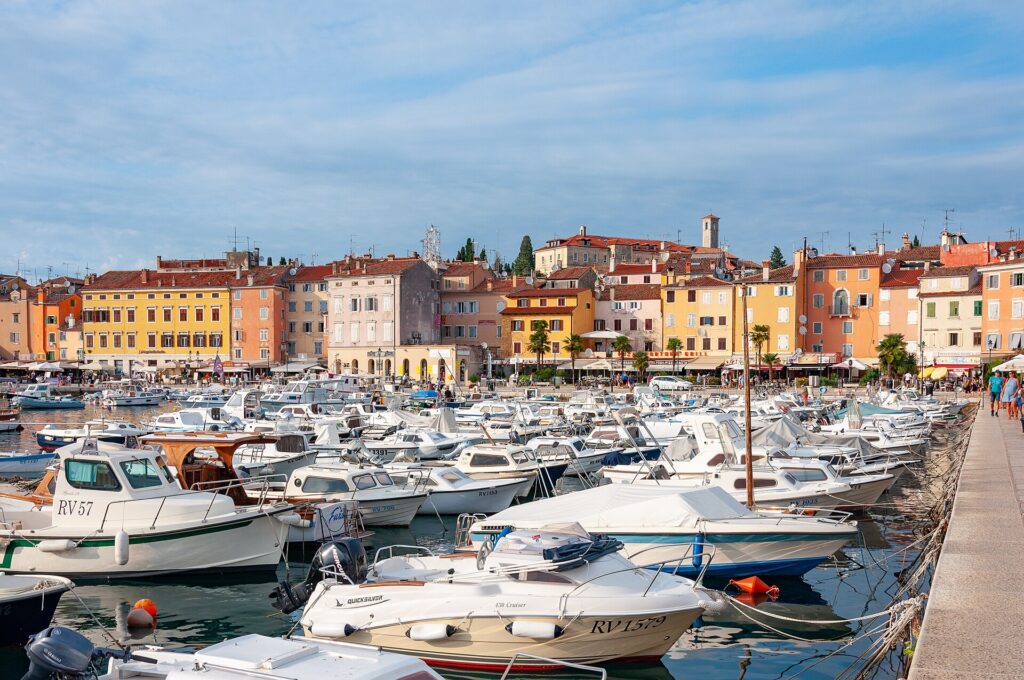
July and August are Rovinj at full volume — daytime highs regularly reach 25–30°C, the sea is at its warmest, and the town is genuinely lively: open-air concerts, packed konobas, boats queuing to dock in the harbour. If you love that buzz and don’t mind planning dinner reservations a day ahead, this is still a wonderful time to be here. Just know that it’s also when accommodation books out first and prices are highest, so if you’re set on these months, book your room early rather than a few weeks out.
Photo: Mateusz Kaminski, via Wikimedia Commons
May and October: quieter, cooler, still beautiful
May and October are the edges of the swimming season. The sea in May sits around 18°C — technically swimmable, and locals are already in the water by late May, but most visitors wait for June’s warmer 22°C. October mirrors this from the other direction: air is mild, the sea holds onto its summer warmth a little longer than you’d expect, and the Old Town empties out just enough that a morning coffee on the Riva feels unhurried again. If you’re coming for the town itself — the walking, the photography, the seafood — rather than for a beach holiday specifically, these two months are genuinely underrated.
November–March: Rovinj at its quietest
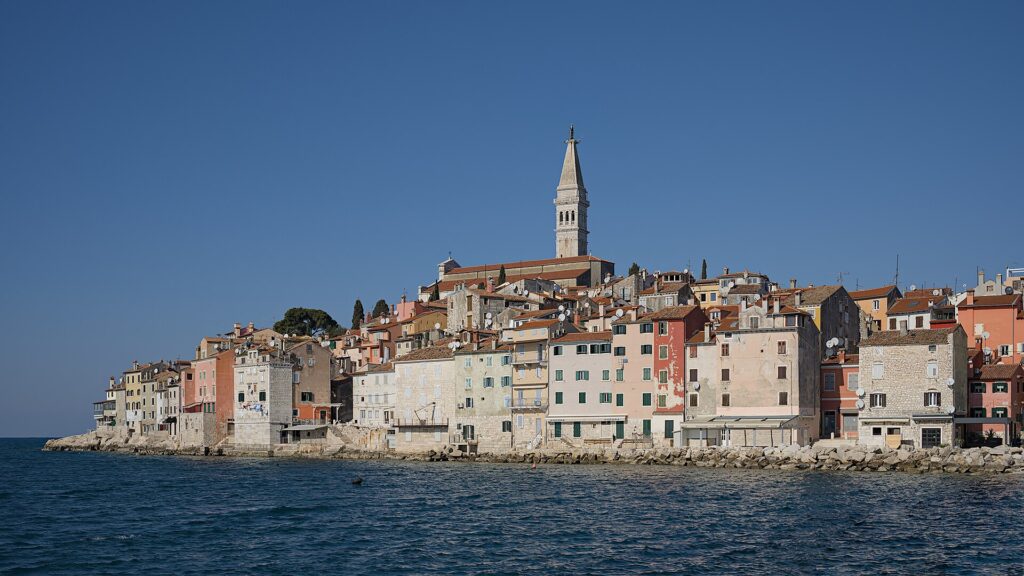
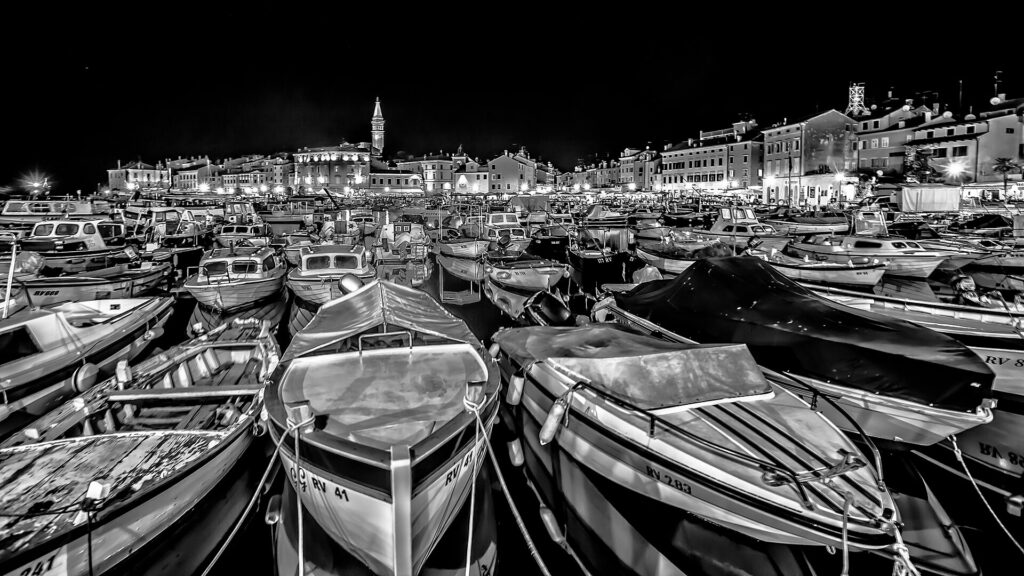
Winter in Rovinj is a completely different town. It’s quiet, often grey, and noticeably cooler by Adriatic standards — plenty of tourist-facing restaurants and shops scale back their hours or close for the season entirely. But there’s something to be said for it too: no queues at St. Euphemia’s, no crowds on the Grisia, and a stillness in the Old Town’s stone lanes that summer never allows. It’s not for everyone, but if you’ve already done the summer version of Rovinj and want to see the town breathe, winter has its own quiet charm.
Photo: Valerii Tkachenko, via Wikimedia Commons
So, what's actually "best"?
It depends what you’re after. Peak beach holiday with maximum atmosphere: July–August. Warm sea, good weather, and a town that still feels like itself: June or September, and this is genuinely our own recommendation to most guests. A calmer, cooler visit built around walking and eating rather than swimming: May or October. A near-empty Old Town and a completely different side of Rovinj: winter.
Whenever you land on, arriving is the easy part — self check-in means you’re never stuck waiting on us regardless of your flight time, and we’re at reception whenever you’d like to say hello in person.
Yes — along with June, it’s widely considered the best balance of warm, swimmable sea (around 22°C), pleasant daytime temperatures, and noticeably fewer crowds than July or August.
Technically yes — the sea sits around 18°C, which locals consider swimmable, though most visitors find it a little cold and prefer to wait until June when it warms to about 22°C.
July and August are the busiest months by a wide margin, with restaurants, beaches, and the Old Town at their fullest. If you prefer a quieter pace, June or September offer nearly the same weather with far fewer people.
It’s a different experience rather than a lesser one — many restaurants and shops reduce their hours, but the Old Town is empty and calm, which has its own appeal if you’ve already experienced the summer version of the town.
As early as you can. Peak-season rooms in the Old Town tend to book out weeks or months ahead — shoulder-season months like June and September are more forgiving if you’re planning last-minute.
On our web site we use cookies to provide you with the best experience that we would not be able to use without the cookies. AcceptRead more
Privacy Policy
Privacy Overview
This website uses cookies to improve your experience while you navigate through the website. Out of these, the cookies that are categorized as necessary are stored on your browser as they are essential for the working of basic functionalities of the website. We also use third-party cookies that help us analyze and understand how you use this website. These cookies will be stored in your browser only with your consent. You also have the option to opt-out of these cookies. But opting out of some of these cookies may affect your browsing experience.
Necessary cookies are absolutely essential for the website to function properly. This category only includes cookies that ensures basic functionalities and security features of the website. These cookies do not store any personal information.
Any cookies that may not be particularly necessary for the website to function and is used specifically to collect user personal data via analytics, ads, other embedded contents are termed as non-necessary cookies. It is mandatory to procure user consent prior to running these cookies on your website.